
Forest School
Forest School Intent Statement – SEMH Secondary School
At our Forest School, we aim to provide a safe, nurturing, and stimulating outdoor environment that supports the social, emotional, and mental health needs of our students. We believe that nature-based experiences promote emotional regulation, build self-confidence, and foster resilience in young people who face challenges in traditional learning environments.
Our intent is to:
- Support holistic development by encouraging personal, social, and emotional growth through hands-on, nature-based learning.
- Develop positive relationships by fostering trust, communication, and collaboration between students and staff in a relaxed, non-judgmental setting.
- Promote mental well-being by using nature to reduce anxiety, increase mindfulness, and provide a therapeutic outlet for self-expression.
- Enhance engagement by offering practical, learner-led activities that promote curiosity, problem-solving, and creativity.
- Encourage responsibility and independence by allowing pupils to take supported risks, make choices, and develop their own learning paths.
- Embed values of respect for nature, each other, and the wider community through environmental education and conservation practices.
Forest School is an essential part of our wider curriculum, designed to re-engage learners, build life skills, and prepare students with SEMH needs for positive futures.


Forest School Implementation – SEMH Secondary School
To meet our intent, Forest School is delivered through a structured yet flexible program designed to meet the individual needs of our SEMH learners. Our approach is trauma-informed, student-centred, and grounded in experiential learning.
How We Implement Forest School:
- Weekly Sessions in a Natural Setting
- Pupils attend Forest School weekly throughout the year in all weathers, ensuring continuity, routine, and long-term development.
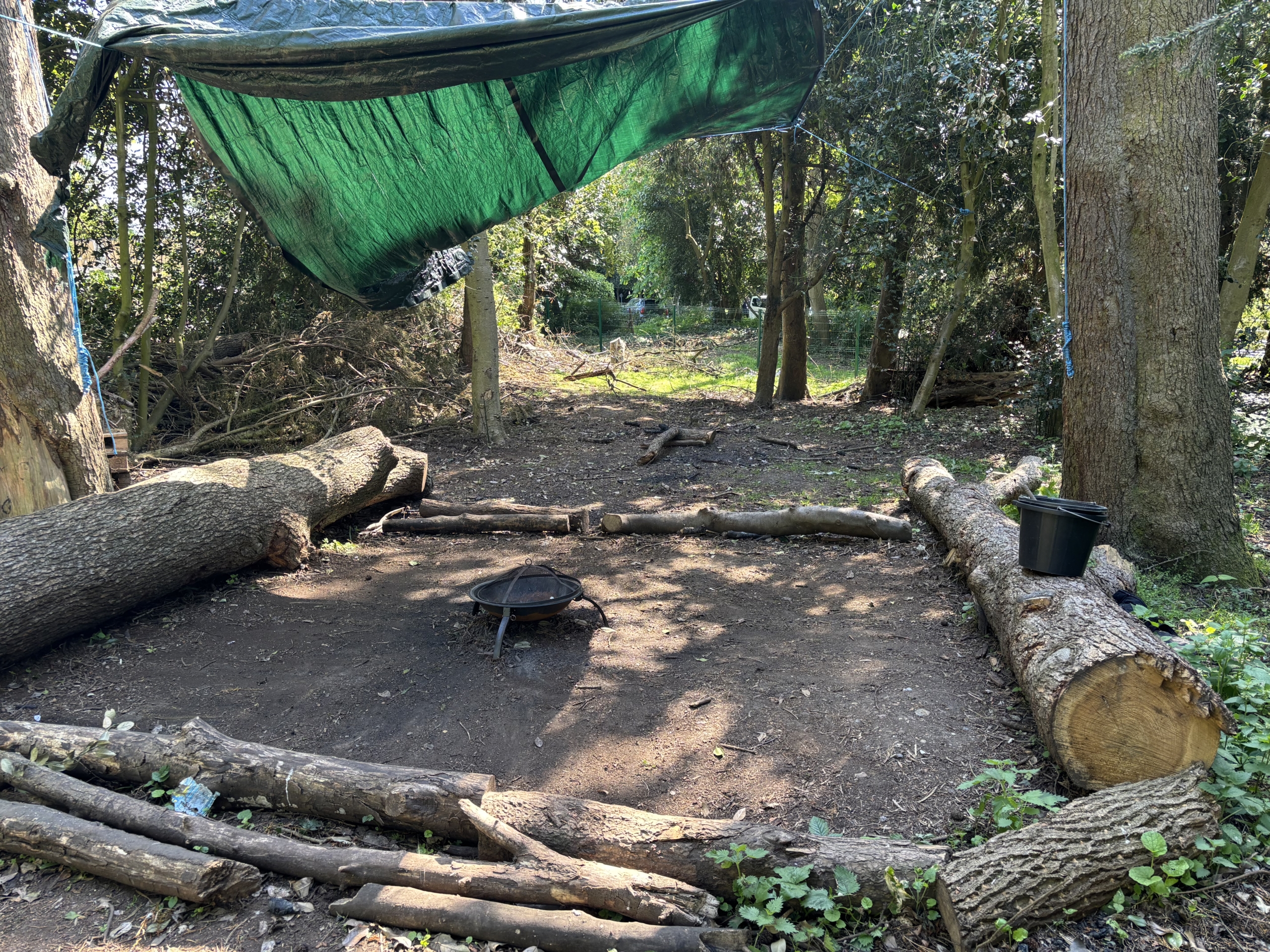
- Sessions are held in a dedicated, safe outdoor space either onsite or in local woodlands.
- Experienced and Trained Staff
- Sessions are led by qualified Forest School practitioners who are experienced in working with SEMH students.
- All staff use trauma-aware strategies to support regulation, de-escalation, and positive behaviour management.
- Individualised and Adaptive Planning
- Activities are planned with flexibility to meet the emotional and developmental needs of each pupil.
- Learners are supported to progress at their own pace, with tasks differentiated and adapted where needed.
- Curriculum Links and Holistic Learning
- Sessions integrate elements of PSHE, science, art, and citizenship, alongside personal and social development.
- Key themes include emotional regulation, teamwork, problem-solving, and nature awareness.
- Therapeutic and Reflective Practices
- Time is given for pupils to reflect, talk, or use sensory techniques to self-regulate.
- Staff use therapeutic language and embed emotional literacy throughout the session.
- Supported Risk-Taking and Skill Building
- Pupils engage in tool use, fire lighting, den building, and environmental tasks, with clear boundaries and safety scaffolding.
- This encourages confidence, independence, and resilience in a controlled, supportive environment.
- Behaviour as Communication
- Challenging behaviour is seen as a form of communication; staff respond with empathy, curiosity, and consistent boundaries.
- Reflection opportunities are embedded to help pupils understand their emotions and behaviours.
- Pupil Voice and Choice
- Pupils are given autonomy to make choices about activities, helping to build ownership and engagement.
- Their feedback helps shape future sessions, ensuring relevance and interest.
This implementation approach ensures Forest School is a powerful, restorative tool for pupils with SEMH needs, helping them develop key life skills, emotional strength, and a deeper connection to themselves and the world around them.
Forest School Impact – SEMH Secondary School
The impact of our Forest School provision is seen in the holistic development of our pupils – socially, emotionally, behaviourally, and academically. Through sustained participation in Forest School, students with SEMH needs show tangible improvements in self-regulation, engagement, and confidence, which positively influence their overall school experience and future pathways.
How We Measure Impact:
- Improved Emotional Regulation & Behaviour
- Pupils demonstrate increased ability to manage emotions and behaviours in a healthy and constructive way.
- Fewer incidents of dysregulation and improved readiness to return to classroom learning.
- Enhanced Self-Esteem and Resilience
- Pupils show growing confidence in their abilities, willingness to try new things, and perseverance with tasks.
- Pupils feel safer to take supported risks and reflect on both success and failure positively
- Better Social Skills and Peer Relationships
- Increase in cooperative play, communication, empathy, and problem-solving within group tasks.
- Stronger peer relationships and reduced incidents of social conflict or isolation.
- Increased Engagement with Learning
- Pupils who struggle in traditional classrooms often thrive in Forest School, re-engaging with learning through hands-on, practical experiences.
- Transference of engagement, independence, and curiosity back into classroom environments.
- Pupil Voice and Empowerment
- Pupils express positive feedback about Forest School and can articulate what it gives them emotionally and personally.
- Increase in participation, self-advocacy, and goal-setting during and beyond Forest School sessions.
- Positive Parental and Staff Feedback
- Families and staff report improvements in emotional wellbeing, behaviour at home/school, and overall attitude.
- Forest School recognised as a key contributor to pupils’ personal development plans.
- Evidence in Wellbeing and Progress Tools
- Impact is tracked using tools such as Boxall Profiles, pupil voice surveys, progress journals, and behaviour logs.
- Forest School outcomes contribute to EHCP targets and SEMH support plans.
Our Forest School is not a standalone intervention—it is a transformational part of our whole-school approach to supporting SEMH pupils. It builds emotional strength, life skills, and a renewed sense of purpose and connection—laying foundations for success both in school and beyond.
Please click this link to view the Forest School Curriculum Map